

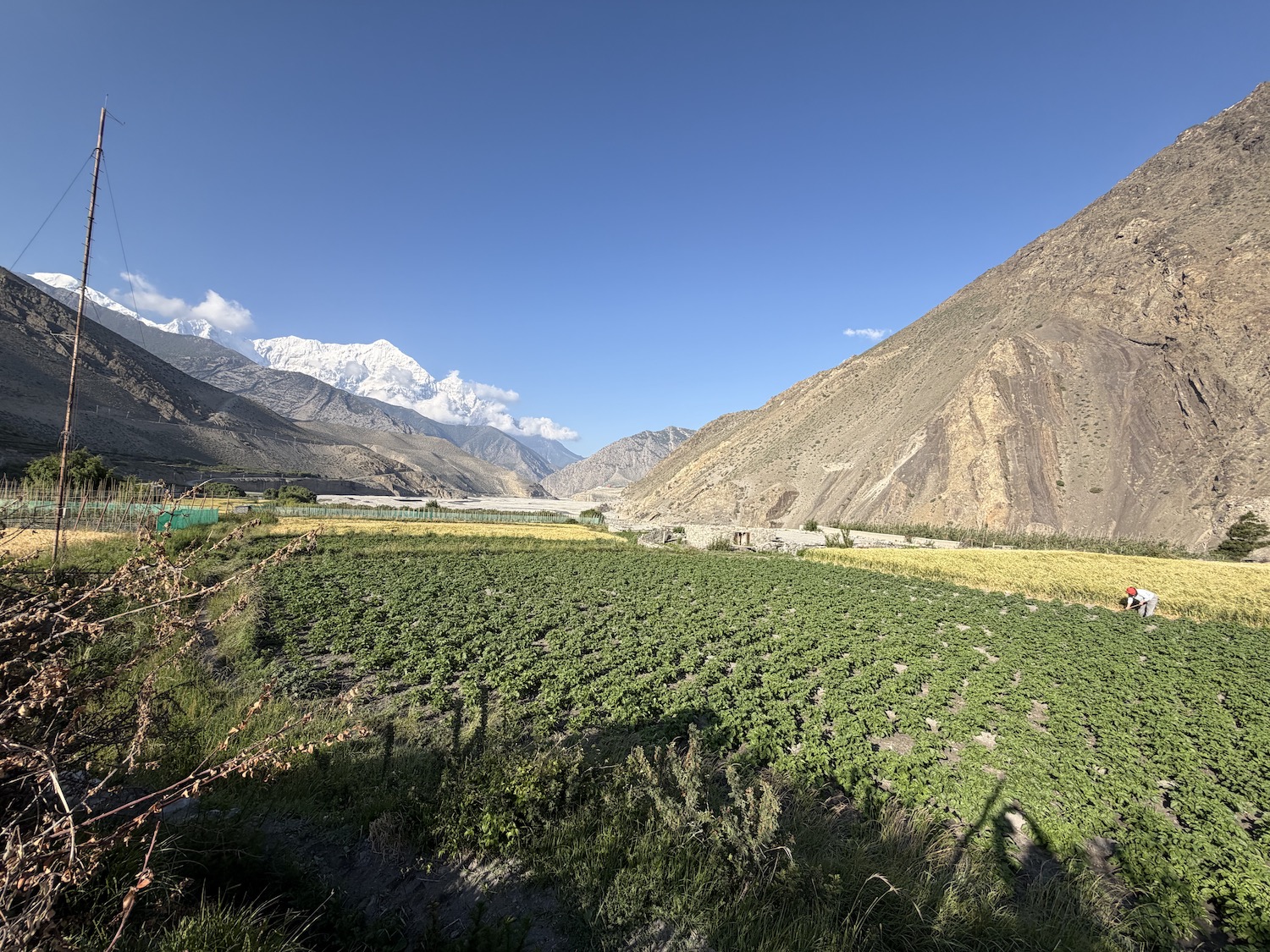
When Sangmu Gurung was a child in Nepal’s trans-Himalayan Mustang district, she accompanied her parents to plant millet in the fertile alluvial fan at Kagbeni. Before planting, there would be a special workship by the head lama for a bountiful harvest.
Along the Kali Gandaki river in kobang, Lete and Tukuche, the fields have burst into Nepal’s autumn colours of red, gold and green of ripening buckwheat (phaphar), millet (kodo), barley (uwa) and apple orchards. These have to be harvested before the first snows come. But outmigration, inroads of processed food and climate breakdown have meant that there fewer farms cultivating indigenous grains of the Himalaya.
“Before sowing uwa, the priest put a stone in the middle of the field on which we used to put offerings of seven different types flour,” Sangmu remembers. “Uwa was not just a food, it was our culture.”
But with these native grains going out of fashion, the unique culture of the people of Nepal’s trans-Himalayan districts of Mustang, Manang, Dolpo is also eroding.
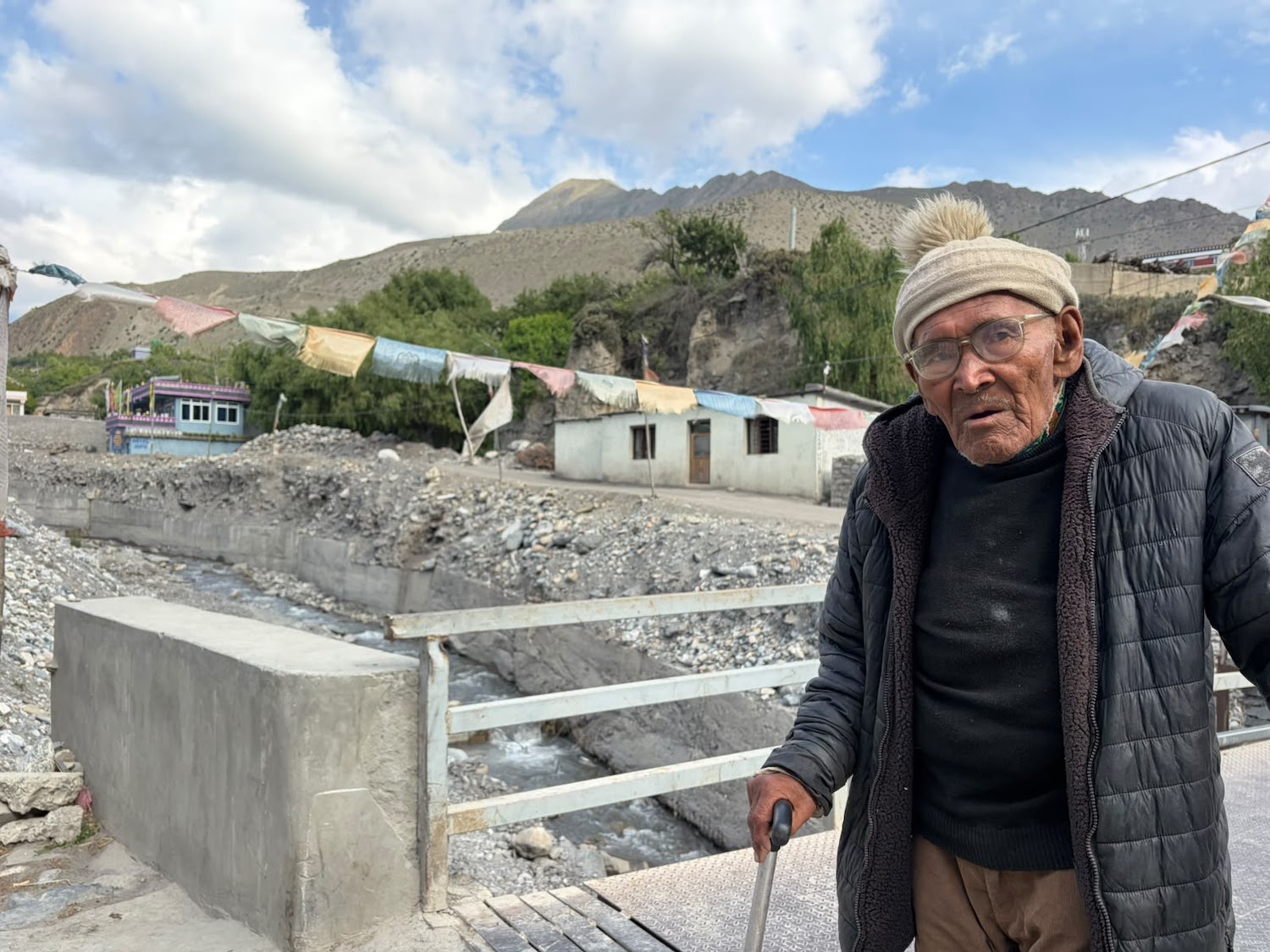
Photo credit: Nepali Times
Tshiring Gurung has 2 hectares of land in Kagbeni, and until three years ago he used to plant barley and buckwheat. But now his farm has turned into a vast apple orchard. It used to be too cold for apples here, but with a warming climate fruit-farming is climbing to higher altitudes, and they are also a more lucrative cash crop.
“Apples did not grow well here before, but for the past years they have been growing well, there is a ready market in Pokhara and Kathmandu and the traders give us an advance for the crop,” says Tshiring, who adds that apples also need less manual labour at harvest time.
Mendo Gurung of Tiri village has also switched from barley to apples. She says, “I haven't planted Uwa and buckwheat for the last five years, apple farming is much more profitable.”
Back in Kathmandu, the Ministry of Agriculture’s statistics show a sharp decline in the cultivation of indigenous grains. In 2015, for example, 472 tonnes of barley was harvested from about 3 sq km of farms in Lower Mustang. Today the harvest is barely 91 tonnes. Annual buckwheat production used to be 995 tonnes, but has fallen dramatically.
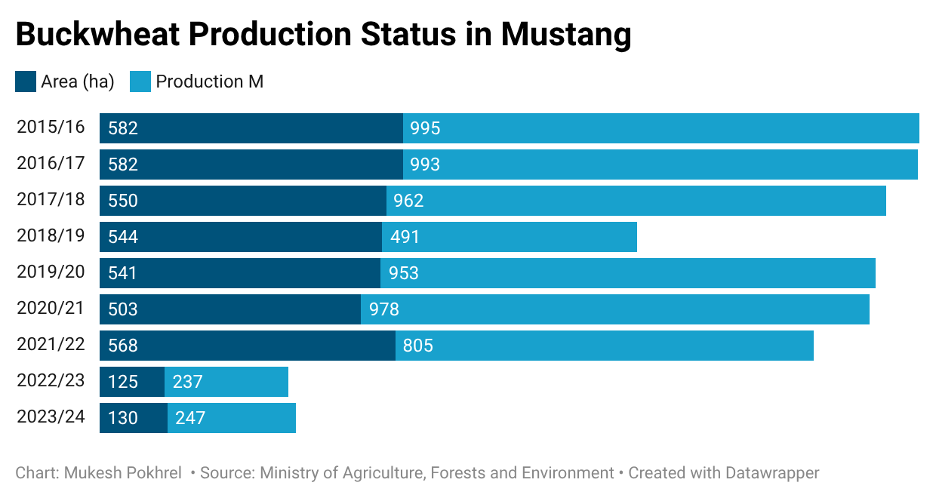 Photo credit: Nepali Times
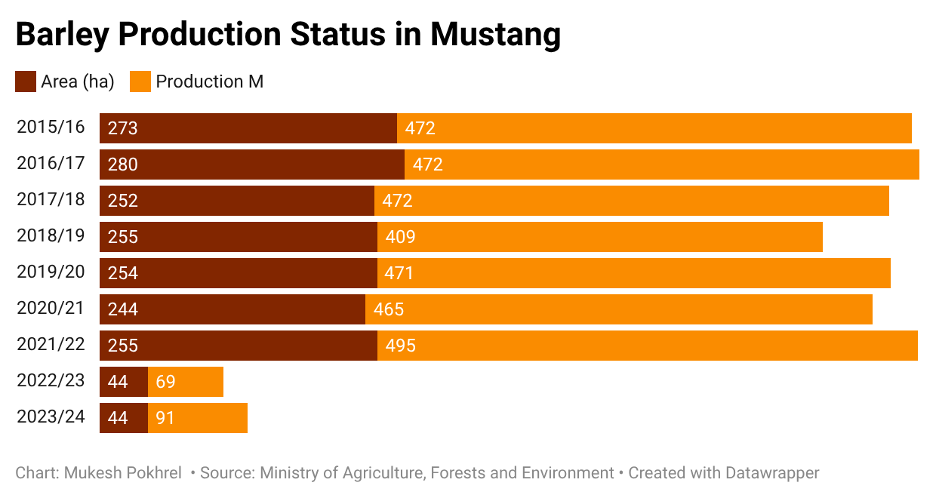 Photo credit: Nepali Times
Yaggin Gurung is nostalgic when she remembers the uwa planting season when everyone donned ceremonial bakkhu and white shawls for the prayers in the field before planting. “It used to be like a festival in our village, growing food was nourishment not just to the body but our culture too. But this tradition is slowly dying out. The coming generation will not have a tase for it.”







Comments
0 commentsNo comments yet — be the first.