

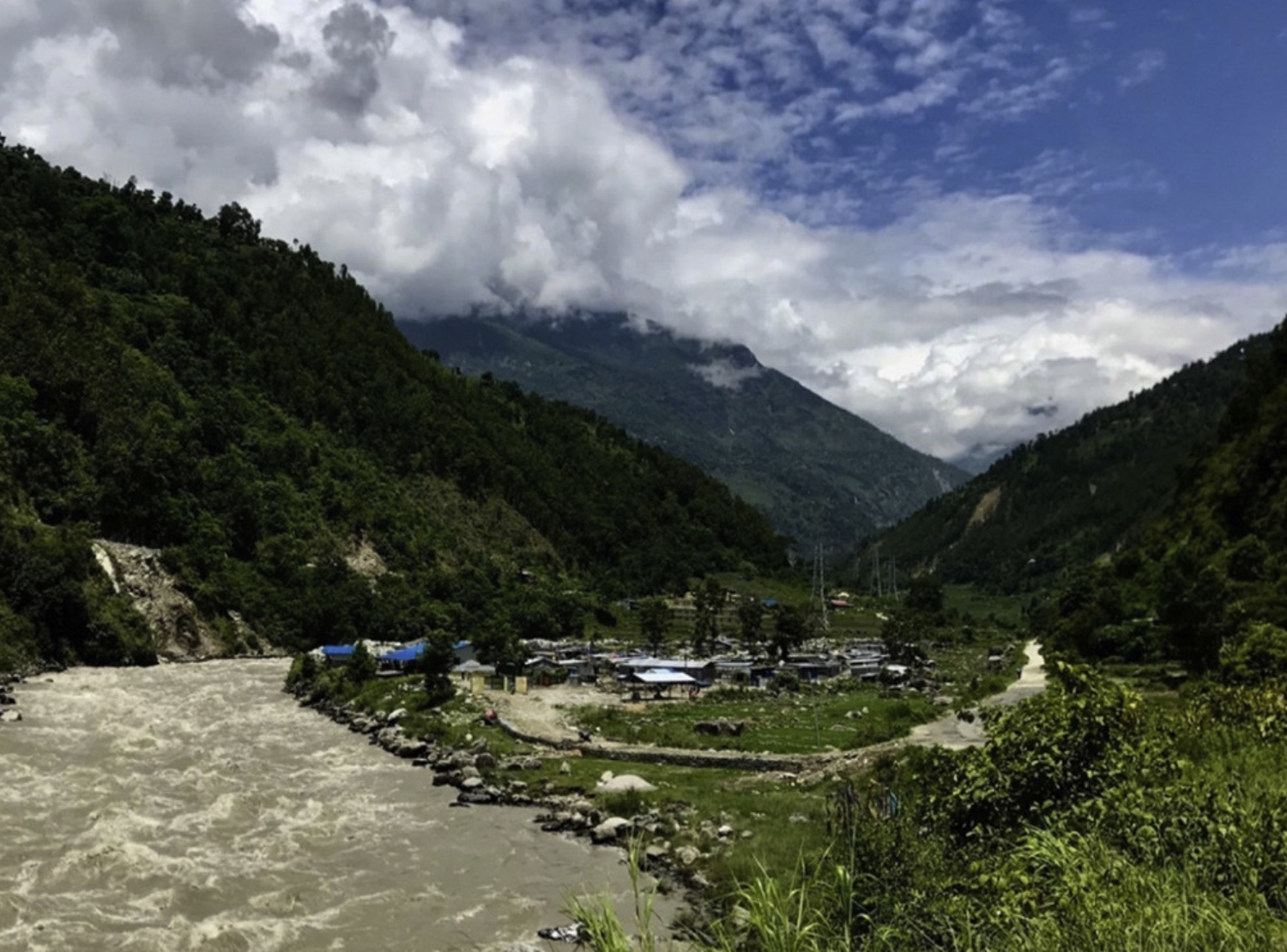
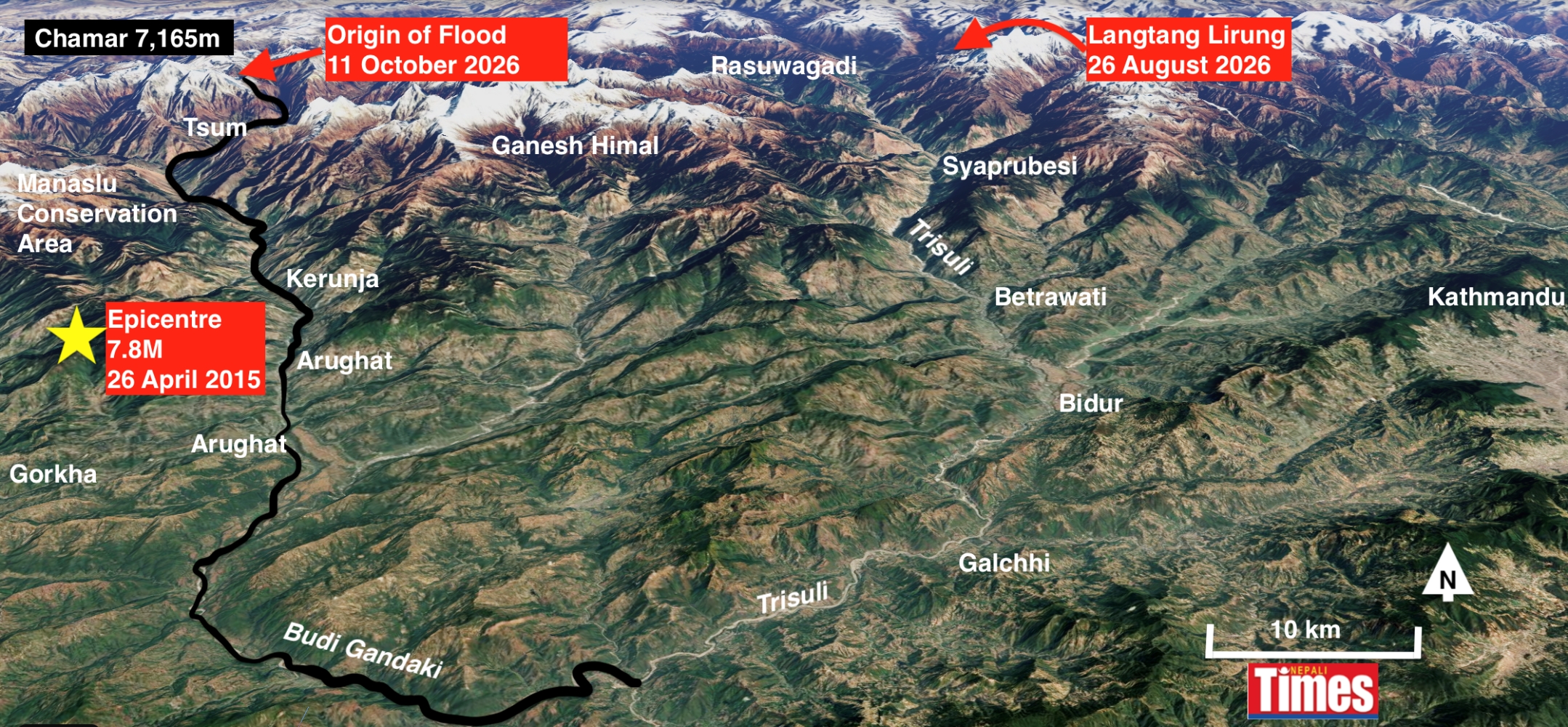
A Tamang settlement on the banks of the Trisuli, Khalte, with its 257 households, no longer exists. It was swept away in seconds by the wall of mud and debris that came down the Trisuli on 26 August. This was not unexpected, in fact many had warned about it.
The earthquake that struck central Nepal on 25 April 2015 razed the mountain villages of Tiru, Gogane, Haku and Mailung in Rasuwa district. Landslides triggered by the 7.8M quake and subsequent aftershocks rendered the ancestral homeland of the indigenous Tamang people uninhabitable.
Around 250 households left behind their homes, steep terrace farms and ancestral shrines to seek safety in the valley below. They were moved temporarily to Khalte by the Trisuli River, which later became permanent. That placed them directly in the path of the next catastrophe.
As early as 2021, anthropological research on the Tiru community had explicitly warned that Khalte was an trap. Researchers and geologists noted that while it provided proximity to roads ad markets, the settlement was right next to a river prone to mountain floods.
Local elders had also voiced deep anxiety about living along the floodplains, fearing that the river would one day claim what little they had left. Yet, year after year, government plans for an integrated resettlement in a safe place was stalled.
Displaced families were caught in bureaucratic delays, a debt trap from purchasing unsuitable land, land-broker scams, and political inertia. On 8 July 2025, a glacial lake burst in China and sent swirling flood waters down the Trisuli, killing 18 people. Although not as big as this year’s flood, it was a warning of what could happen.
And sure enough, it did.
Tamangs are one of Nepal’s major indigenous communities, with ancestral homelands along the Himalayan foothills around Kathmandu Valley. The communities have long maintained strong connections with their land, settlements, livelihoods, culture, language, traditions and social cultural ties.





Comments
0 commentsNo comments yet — be the first.