

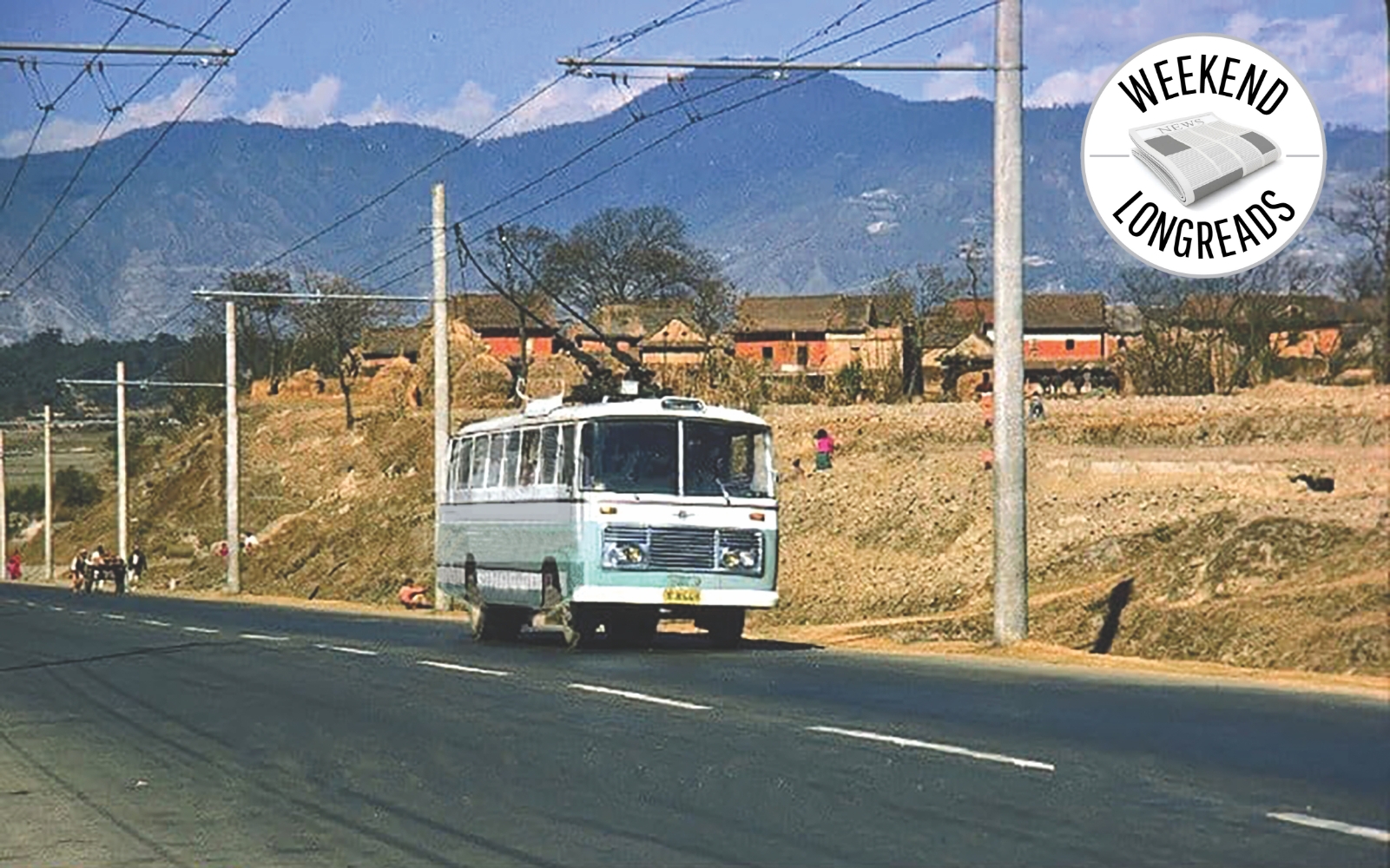
Fifty years ago, The World Bank ranked Nepal as the sixth poorest country in the world. But even back then Kathmandu already had a small but modern, efficient public transportation system.
It did not run on imported diesel but locally produced hydroelectricity. Unfortunately, like other well-designed, well-intentioned development projects in Nepal, the Bhaktapur trolley bus route was allowed to rust away – just like the cargo ropeway service joining Kathmandu to the plains.
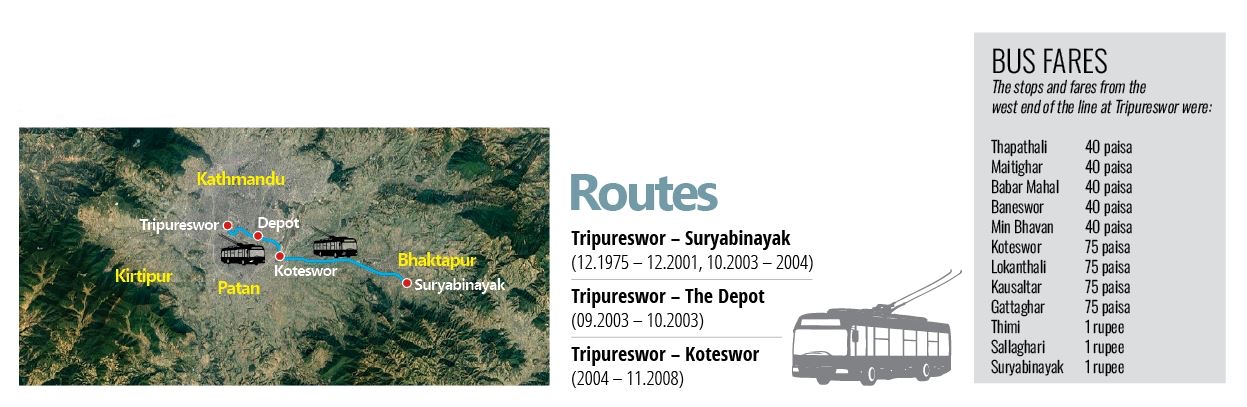
The Chinese built a 115km road from Bhaktapur to Kodari to the border (the Arniko Highway) in 1964. The road from Thapathali to Bhaktapur was improved in 1969, and four years later, the Chinese agreed to install the trolley bus service on the 13km route between Kathmandu and Bhaktapur.
Moulds for production of 10m tall concrete poles arrived from China. Land was acquired to build a terminal and workshop at Baneswor, a sub-power station was set up in Thimi and a bus terminus at Suryabinayak.
Each trolley bus had seats for 26 passengers with standing room for 35. It had an 80 HP, 600-volt (DC) motor, with a top speed of 50 km/h. The buses were type SK-541 manufactured in Shanghai in 1974.
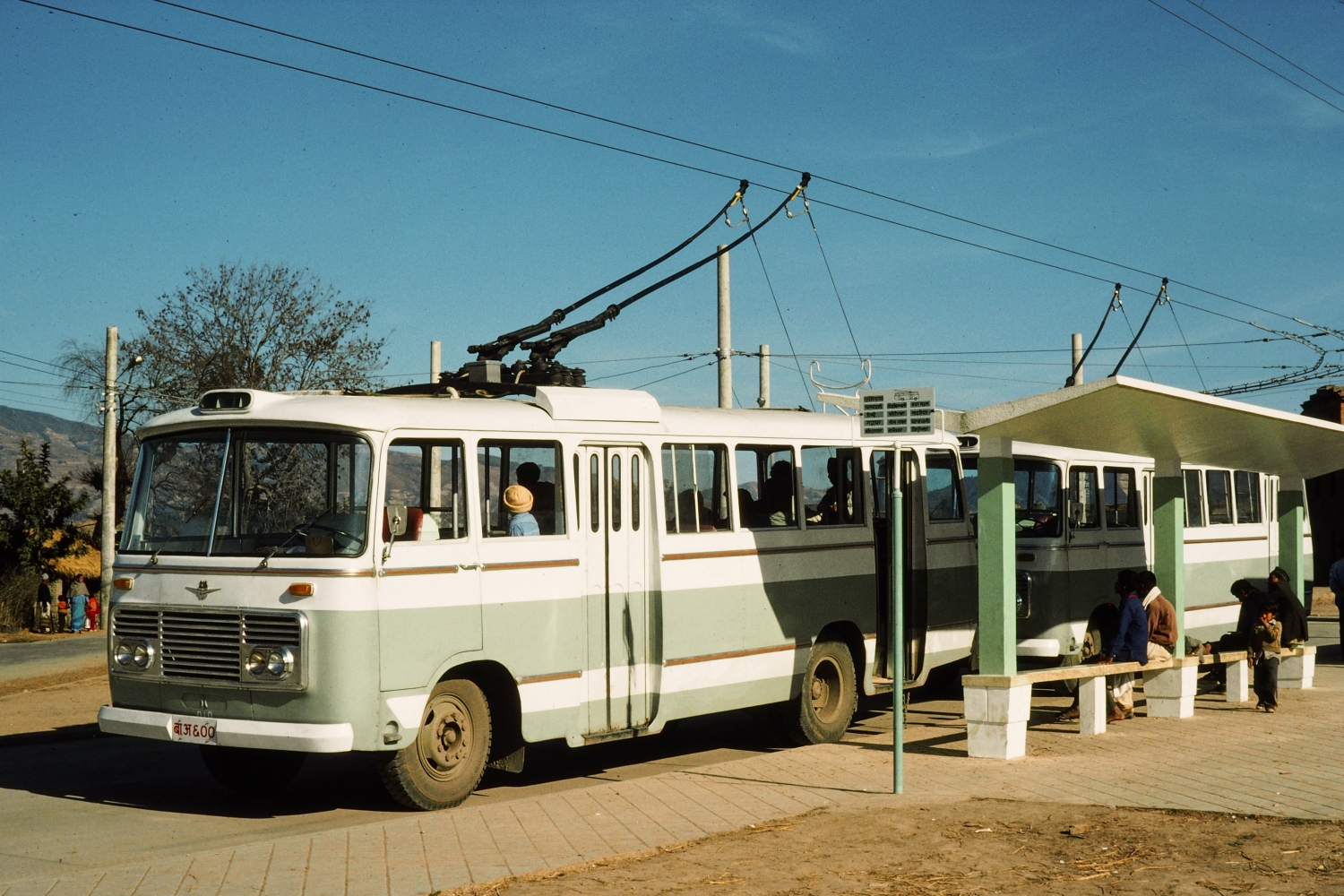
Prime Minister Tulsi Giri inaugurated the trolley bus line on King Birendra’s birthday, 28 December 1975. The government-owned Nepal Transport Corporation (NTC) managed the service and from the very beginning it faced competition from bus syndicates on the Kathmandu-Bhaktapur route.
Six buses and 25 minibuses were operating on that route in 1976, although up to 12,000 passengers a day were riding the 22 sleek trolley buses. Political pressure to reduce fares was brought to bear by government employees, students and workers who travelled daily on the electric buses. So the government issued them discounted season tickets.
A Tribhuvan University graduate student Arjun Raj Banshi wrote a dissertation on the trolley bus in 1982, showing that during its first four fiscal years (1976-77 to 1979-80), the trolley bus service lost Rs298,000, Rs325,000, Rs360,000 and Rs575,000.
The line never broke even for its entire operational life. The staff consisted of 49 working in management, 43 drivers, 37 conductors, 32 technicians, and 21 non-skilled workers. The general manager and board of directors were government-appointed.
Salaries, overtime and other facilities for the employees consumed more than 50% of total expenditure, and charges for electricity were 25%. While annual revenues increased each year, many riders hopped off without tickets, and conductors were lackadaisical in collecting full fares.
The Chinese initially had trained Nepali technicians, but they resigned to seek better job opportunities and higher salaries elsewhere. Workers also became dissatisfied because there were no provisions for life insurance for technicians working on 600 volt overhead lines.
Raj Banshi also noted that the Nepal Electricity Corporation was unable to guarantee a reliable and consistent daily supply of electricity, which affected the ability of the trolley bus to provide adequate and dependable service. Buses were often stranded for hours when the lights went off.
LONG DISTANCE TROLLEYS
Initial enthusiasm over the trolley bus line soon led to several ideas for building similar transportation systems in different areas of Nepal.
Trolley bus lines had political appeal, and a pre-feasibility study of electric public transport as an alternative to petrol-based service on the 200km Tribhuvan Rajpath linking Kathmandu with Birganj was carried out in 1977 by Centre for Economic & Development Administration (CEDA) and the Department of Electricity.



Comments
0 commentsNo comments yet — be the first.