

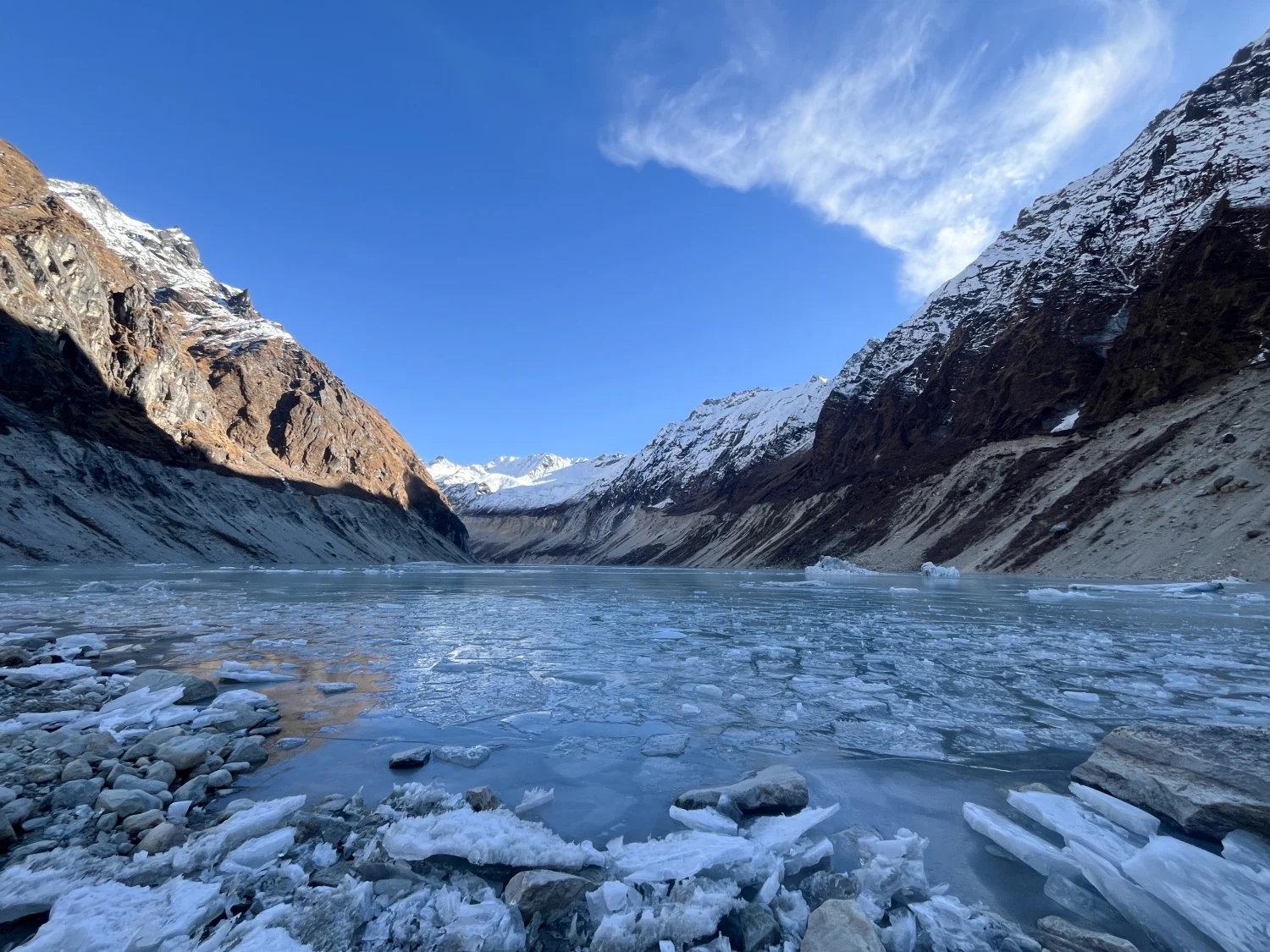
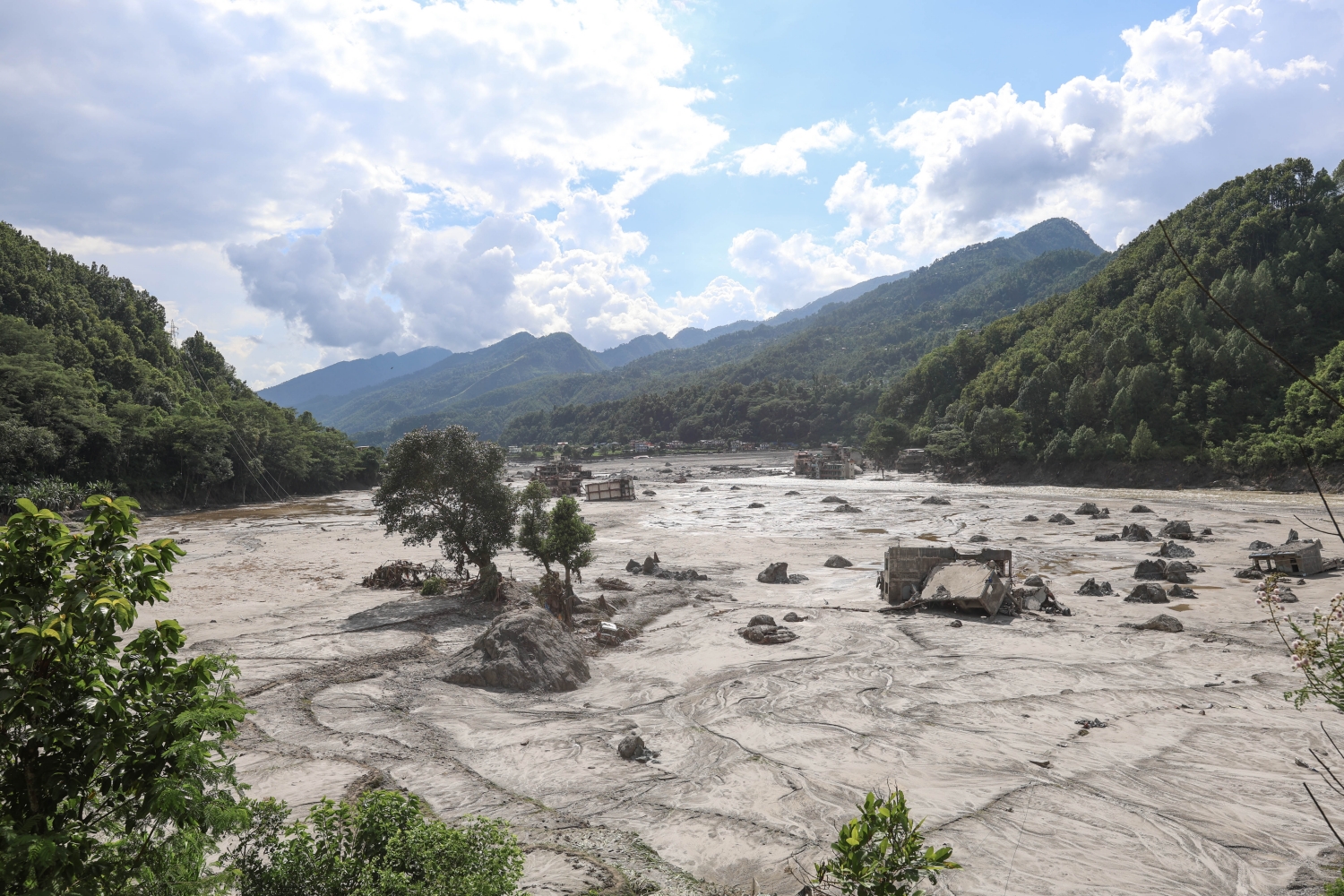
The 26 August climate-induced ice-rock avalanche in the Himalaya triggered a catastrophic debris flood along the Trisuli Corridor, killing thousands and destroying critical infrastructure. It shocked Nepal and stunned the world.
It also propelled Nepal to take the climate crisis and climate justice far more seriously, both domestically and internationally. Prime Minister Balendra Shah devoted his address to the UN General Assembly exclusively to climate justice.
Also at the UN, Foreign Minister Shisir Khanal hosted the Sagarmatha to the Sea: A Call to Action for a Climate-Resilient Future, and highlighted climate justice at the ministerial meetings of the Least Developed Countries, Landlocked Developing Countries, the Non-Aligned Movement, and the Group of 77 and China. He also raised the issue at the pre-COP 31 leaders’ event in Fiji and Tuvalu.
Finance Minister Swarnim Waglé is leading efforts to mobilise international solidarity and support for post-disaster recovery that is estimated to cost $5 billion.
Nepal is calling for international solidarity with all climate-vulnerable developing countries that contribute little to greenhouse gas emissions but suffer disproportionately from their effects. It is well placed to assume a leadership role on behalf of the world’s high-mountain regions, small islands, and coastal states.
Regrettably, despite mounting scientific evidence and disasters the current international climate is not conducive to action. Political leaders in many wealthy and powerful countries that have contributed substantially to global warming continue to deny the climate crisis or resist the measures needed to address it. Their support for long-term climate finance has been woefully inadequate.
Many wealthy and powerful countries are reducing overseas development assistance and increasing military spending. It is therefore difficult to expect a dramatic breakthrough in climate finance in the next few years.
The climate crisis, however, will not go away, it is likely to intensify and pose an existential threat to communities and countries around the world.
I recommend this 10-year strategy to strengthen Nepal’s leadership, build partnerships and establish Nepal as a serious and influential player in international climate negotiations.
1. Domestic Action
To be credible in its global advocacy, Nepal must demonstrate that it is doing everything within its capacity to respond to the climate crisis. Nepal already has an impressive community forestry program, promotion of electric vehicles, greater use of renewable energy and a range of mitigation and adaptation measures.
Its National Adaptation Plan for 2021–2050 and its Nationally Determined Contributions set out ambitious targets in agriculture, water resources, energy, forestry, biodiversity, and human health. Nepal is committed to achieving net-zero carbon emissions by 2045.
Nepal should assemble a strong official delegation for the forthcoming COP31 and other fora, drawing on highly qualified experts not only from government but also academia and civil society. Members of the Nepali team should agree on a common set of national messages and speak with one voice in international forums.
Nepal should also strengthen domestic disaster-risk financing with more robust insurance schemes to protect private property and public assets, including hydroelectric plants. Urban, regional, and spatial development need reforms to counter rapid but poorly planned settlement growth and infrastructure development along snowed rivers. Some settlements will need to be relocated to safer areas, this could be costly and potentially controversial.
Nepal should aim to build a more disaster-resilient nation with holistic resettlement plans, ensuring access to jobs, schools, health care, transport, and other essential services.
2. Regional Action
As Prime Minister Shah observed in his UNGA address, rivers do not stop at borders, glaciers do not carry passports and floods do not need visas.
Nepal is advocating for a Himalayan Climate Resilience Mechanism to strengthen joint early-warning systems, share scientific and satellite data, exchange technical expertise, monitor dangerous glacial lakes, and coordinate cross-border assistance. The mechanism could initially bring together China, India, and Nepal, then include all countries of the Hindu Kush Himalaya and High Mountain Asia. The Kathmandu-based International Centre for Integrated Mountain Development (ICIMOD) could help convene and institutionalise such a mechanism.
3. Global Advocacy
Greenhouse gas emissions and wildfires affect sea levels, rainfall patterns, extreme weather, permafrost thaw and the melting of icecaps across the world. The crisis demands concerted global action guided by the principle of common but differentiated responsibilities and respective capabilities. Those that have historically contributed most to the problem and those with the greatest capacity to respond must do more.








Comments
0 commentsNo comments yet — be the first.