

For almost four decades, Nepal has experienced repeated political transformations without a corresponding consolidation of effective governance. The restoration of multiparty democracy in 1990 ended the Panchayat system and established competitive politics, initially dominated by the Nepali Congress (NC), the Nepal Communist Party (Marxist-Leninist) (UML), and the Rastriya Prajatantra Party (RPP), which was formed by former Panchayat-era politicians.
The subsequent decades brought constitutional change, the Maoist insurgency, the Comprehensive Peace Agreement (CPA), the abolition of the monarchy, federalism, republicanism, secularism, and the inclusion of new political forces.
Yet political transformation did not produce comparable institutional consolidation. Governments changed frequently, factionalism deepened, political patronage expanded, and the state remained vulnerable to clientelist networks.
The central problem, therefore, was not a lack of political change. It was the failure to convert political change into state capacity.
That distinction is essential to understanding Nepal’s present moment. The September 2025 Gen Z uprising and the March 2026 election disrupted a political cycle that had persisted for decades. But the rise of a new political force is not, by itself, national resurgence. The strategic test is whether Nepal can transform political renewal into institutional credibility, economic capacity, social cohesion, and strategic stability.
From Political Transformation to Institutional Weakness
The Maoist insurgency, launched in 1996, just six years after the restoration of democratic order, with the stated objective of establishing a proletarian republic, exposed the complexity of Nepal’s political turning point. The conflict ended with the Comprehensive Peace Agreement (CPA) of November 21, 2006, bringing the armed Maoists into the democratic mainstream. The subsequent political settlement transformed Nepal from a constitutional monarchy into a federal democratic republic and secular state, while the Madhesh movements brought questions of representation, inclusion, and federal restructuring to the centre of national politics and governance.
The open border with India remains an important economic, social, and civilizational asset. However, its traditional reliance on trust and informal movement must increasingly be complemented by twenty-first-century governance.
These were profound constitutional and political changes. The 2015 Constitution institutionalized federalism, republicanism, and secularism. Yet the post-2006 transition produced a critical contradiction: Nepal changed the architecture of the state faster than it strengthened the state’s capacity.
The new political order expanded representation and redistributed political power, but it also intensified competition for control over public institutions and state resources. Coalition governments, frequent changes in leadership, and party patronage increasingly politicized appointments and weakened institutional autonomy. Political access and the financing of political parties and prominent leaders became important pathways to economic opportunity, public contracts, and administrative influence. Over time, corruption came to be perceived not simply as individual misconduct but as a systemic problem linked to political networks and weak institutional accountability.
These were profound political achievements, but they produced a critical contradiction: political transition without institutional consolidation led to politicization and patronage, which weakened institutional autonomy and, in turn, public confidence in the state.
This became the first structural weakness of the post-2006 order.
The Economic Consequence: An Economy of Survival
Political transformation was not matched by a comparable transformation in productive capacity. Industrialization remained weak. Manufacturing failed to become a major source of employment. Agriculture continued to suffer from low productivity, fragmented landholdings, and limited commercialization.
The privatization of several state-owned enterprises beginning in the late 1990s did not generate a sustained industrial take-off, while political uncertainty, inadequate infrastructure, regulatory weaknesses, and limited investment constrained private-sector growth.
The result was insufficient domestic employment and opportunity. The causal chain was clear: weak institutions led to policy uncertainty, which discouraged productive investment and limited domestic employment opportunities.
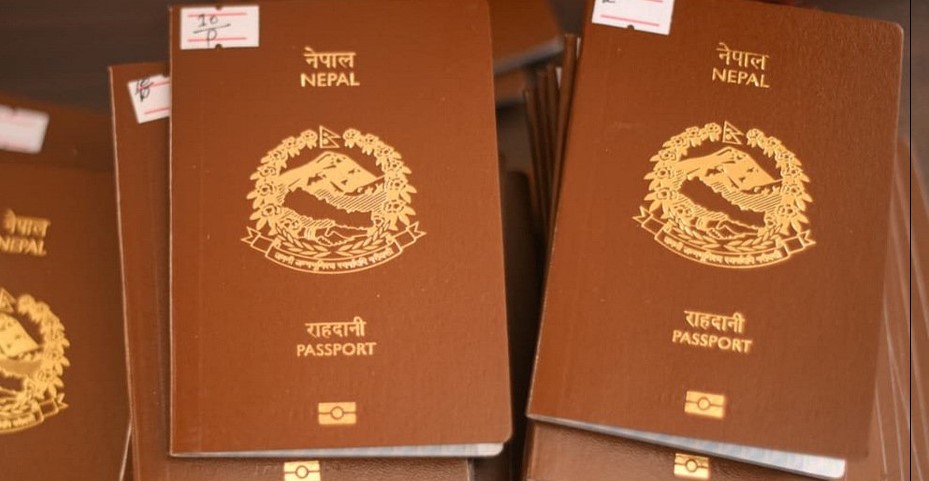
The demographic consequences were profound. Migration consequently became Nepal’s economic safety valve. Unable to generate sufficient productive employment at home, Nepal increasingly relied on foreign employment. Between FY 2008/09 and FY 2023/24, the government issued approximately 5.7 million labour approvals for foreign employment. Remittances subsequently became one of the foundations of the national economy, reaching roughly 25 percent of GDP by FY 2023/24.
Migration reduced household poverty and generated essential foreign exchange. Remittances supported consumption and helped stabilize the economy. But they also concealed a deeper structural weakness: the inability of the domestic economy to generate sufficient productive employment.
Nepal increasingly developed a model in which young people left the country, remittances flowed in, consumption increased, imports expanded, and domestic productive transformation remained weak. This model was economically stabilizing but structurally limiting.
The third link in the causal chain was therefore clear: weak domestic opportunities led to labour migration, which increased remittance dependence and allowed the postponement of structural economic reform.
The social consequences accumulated gradually. A generation came of age in a republic that promised inclusion, federalism, opportunity, and a more accountable state but experienced a very different reality: political instability, perceived corruption, weak public services, limited employment opportunities, and the normalization of migration as the principal route to economic advancement.
The challenge is not migration itself. The challenge is an economy in which migration becomes the principal route to opportunity for an entire generation.
The Demographic and Governance Challenge
A further vulnerability is emerging from the interaction between out-migration, immigration, identity, and an inadequately managed open border. Nepal is simultaneously losing a large share of its working-age population to foreign employment while receiving cross-border workers and migrants whose scale and composition are not adequately captured by existing systems.



Comments
0 commentsNo comments yet — be the first.