
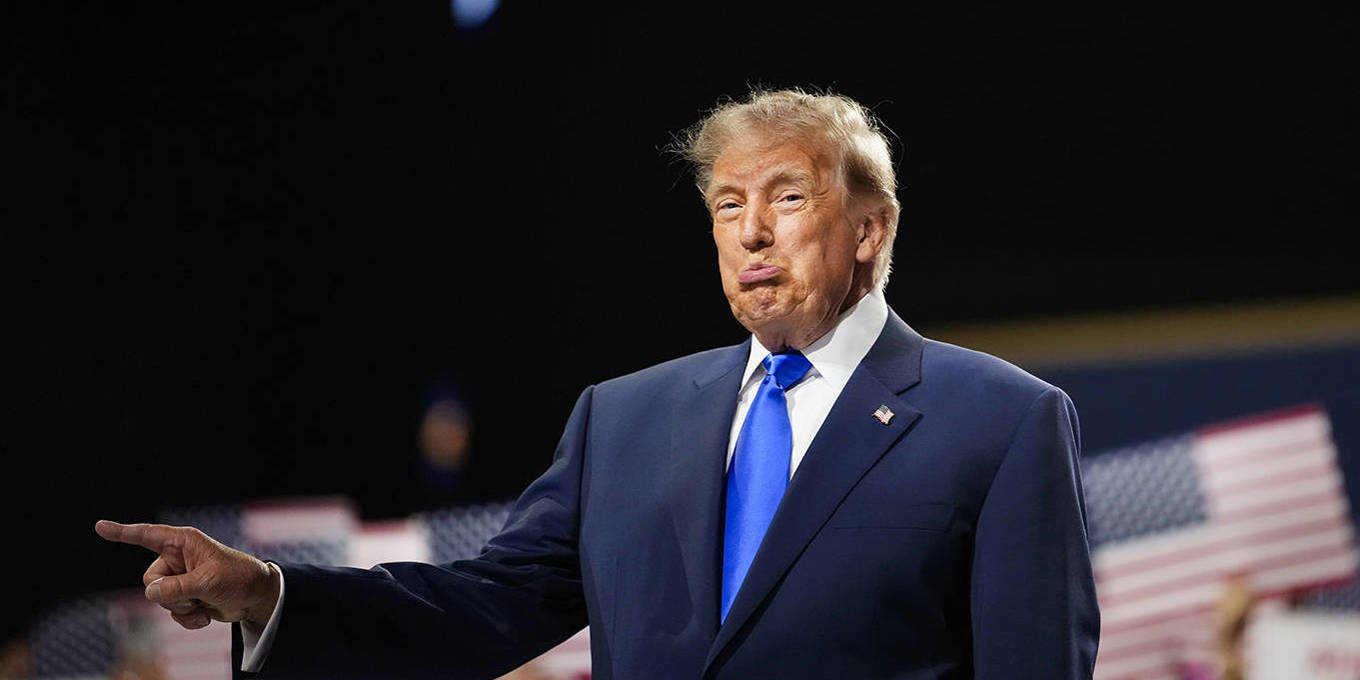
At the UN General Assembly last month, US President Donald Trump delivered a victory speech. A decade after telling his supporters that he would stack so many victories that “you may even get tired of winning”, offering a list of successes, including the settlement of eight wars, action against “the bully of the Middle East” in Iran, a deal with Denmark on Greenland, India-Pakistan, etc.
His speech also revealed the growing limits on his power as he enters the lame-duck stage of his presidency, experiences collapsing approval ratings, and interacts with leaders whose tenures will extend far beyond his own. Previously the most powerful, unpredictable force on the international stage, Trump has now passed the peak of his ability to disrupt the international order.
The evidence of Trump’s fading influence can be found across his top priorities: tariffs, the Iran war, and immigration enforcement. Earlier this year, the US Supreme Court struck down his use of emergency powers to institute tariffs, and even before that decision, Trump was confronted with the limits of his power in his brief trade war with China, which responded to his 145% tariff rate with a 125% rate of its own and a halt on critical mineral exports.
As a result, Trump has not only moderated his policies on China, he has almost entirely reversed his position, rolling out the red carpet for President Xi Jinping during his recent visit to Washington. Trump even greeted Xi at the airport—the first time an American leader has offered such a welcome for a state visit since 1962—and offered to sell China weapons (in violation of US law).



Comments
0 commentspsst, say something nice 💬