

Summary
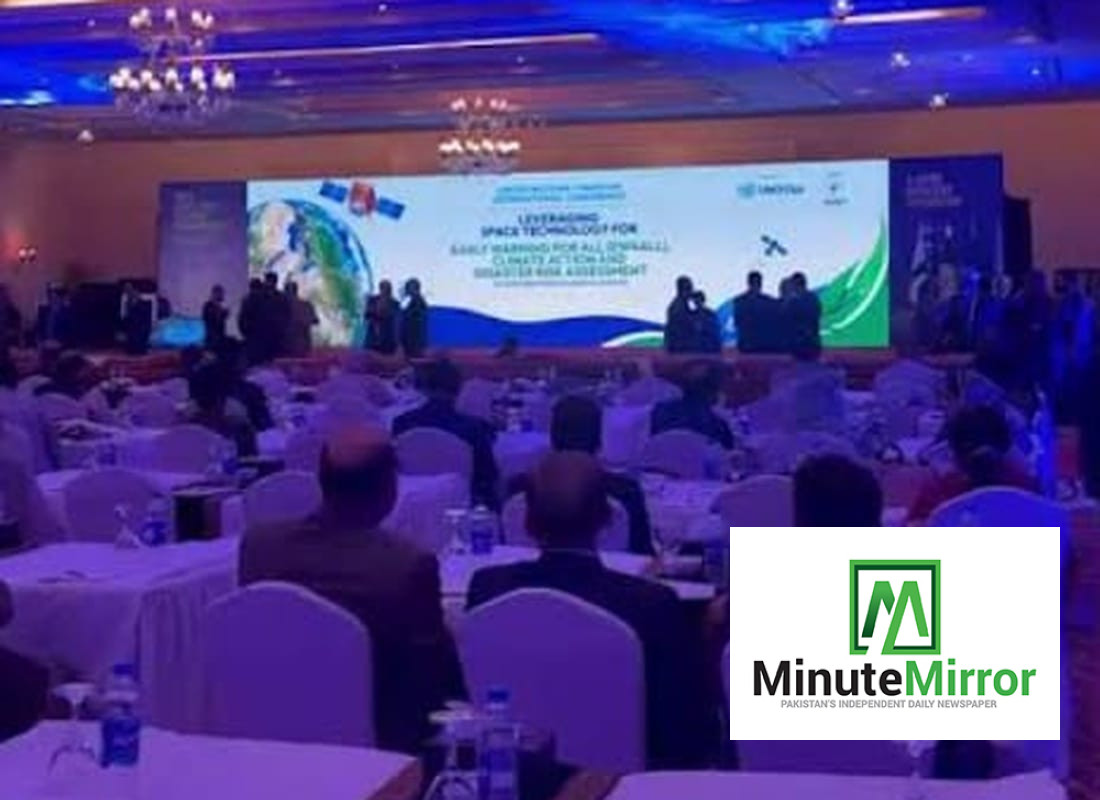
- *This is the biggest growing challenge for Pakistan and the world.* *CHAPTER 2: WHAT IS HAPPENING INSIDE SERENA HOTEL?* Official Title: *International Conference on Leveraging Space Technology for Early Warning for All, Climate Actions and Disaster Risk Assessment* Host: Space and Upper Atmosphere Research Commission (SUPARCO) Co-hosts: UNOOSA – United Nations Office for Outer Space Affairs, UN-SPIDER Disaster Management Programme, ISNET – Inter-Islamic Network on Space Science and Technology, APSCO – Asia Pacific Space Cooperation Organization.
- *CHAPTER 4: THE 7 PAKISTANI ANGLES NO ONE ELSE IS COVERING* *Angle 1 – NDMA & PDMA:* For the first time, satellite alerts will go directly to Deputy Commissioners within 5 minutes.
- *Angle 7 – Strategic Autonomy:* Against 50+ satellites of a neighboring country, Pakistan building its own early warning is a national security requirement.
AI Generated Summary
How a secretive space agency, 250 foreign experts, and a women-led education directorate are building Pakistan’s first pre-disaster warning system as glaciers melt and seas rise
ISLAMABAD : This is not a normal conference.
A five-day international conference has started at Serena Hotel Islamabad, where Pakistan’s national space agency has gathered 20 countries, 250 scientists and every major UN space agency to answer one question that will decide Pakistan’s survival in the next 10 years:
*Can Pakistan see a disaster before it happens?*
Minute Mirror has investigated the full background, all Pakistani angles, and the complete roadmap emerging from this closed-door meeting.
*CHAPTER 1: THE CHALLENGE THAT IS BIGGER THAN TERRORISM AND ECONOMY*
Pakistan is not hosting this conference out of prestige. It is hosting it out of compulsion.
Our investigation finds:
1. Pakistan is ranked among the top 10 most climate-vulnerable countries in the world.
2. The country has more than 7,200 glaciers – the largest number outside the poles. 3,044 glacial lakes have been identified as potentially dangerous, 33 are classified as extremely dangerous for GLOF – Glacial Lake Outburst Flood.
3. In 2022, 33 million people were affected, 1,700 killed, and 30 billion dollars lost in floods. The first satellite mapping of that flood was done by SUPARCO itself.
4. Every year, Pakistan loses 4% of its GDP to floods and droughts. 65% of employment depends on agriculture, which is directly hit.
5. The sea is eating 80 acres of land every year in Thatta, Badin and Karachi coastal belt.
6. The UN’s own assessment: half the world still has no early warning for floods, storms and heatwaves. The UN target EW4All – Early Warning For All by 2027 – has chosen Pakistan as a pilot country.







Comments
0 commentsNo comments yet — be the first.