
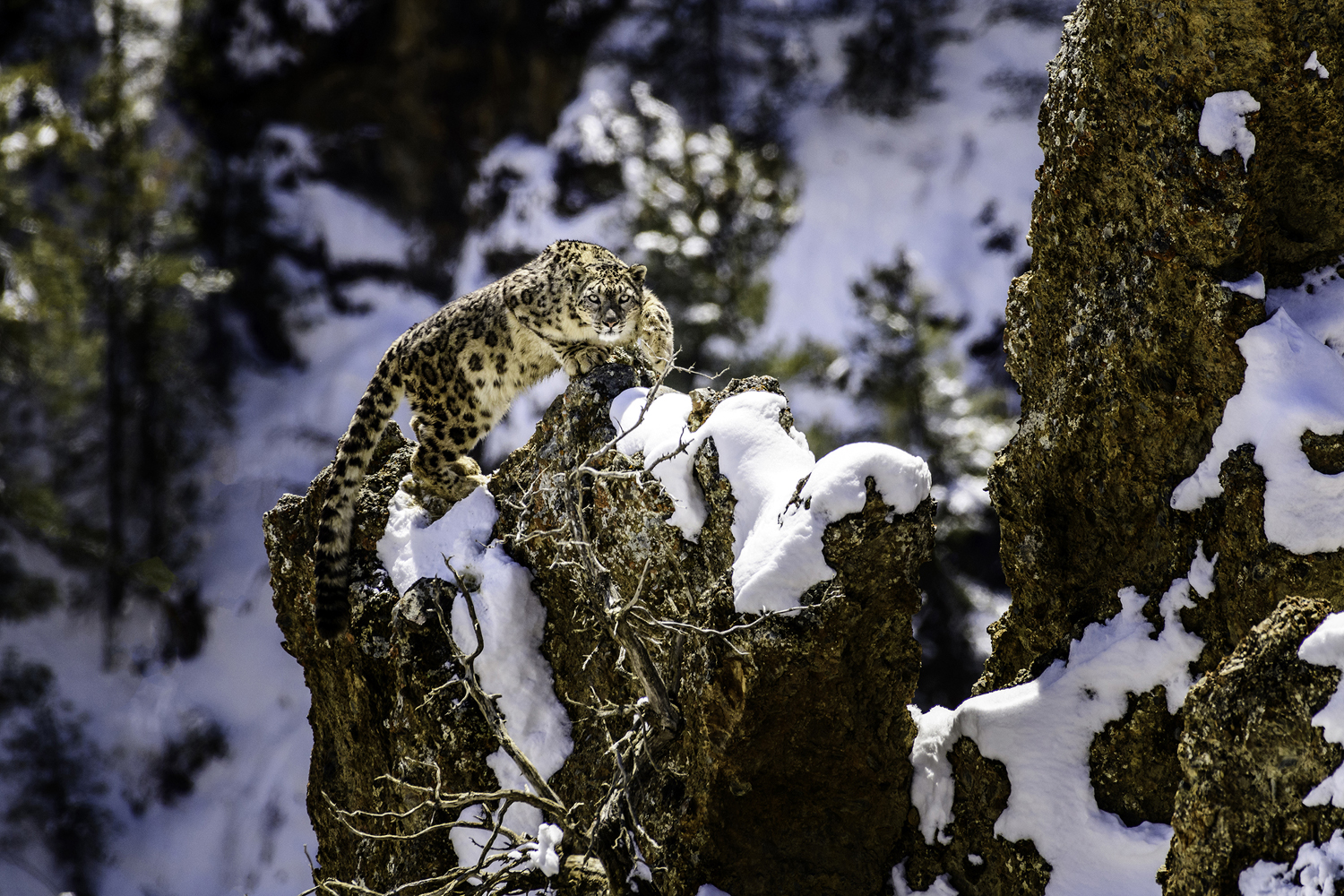
Four years ago, during a snow leopard expedition to Upper Dolpo a traditional medicine practitioner at the ancient Samling Monastery told me about the role this elusive Himalayan predator plays in local tradition.
Sherab Tenzin Lama is an ‘Amchi’ healer who has been practicing traditional medicine, a knowledge system passed down through generations. Over cups of a potent local drink alternated with hot water, the conversation progressed from snow leopards to the spaces that host them.
The rangelands of this remote trans-Himalayan region sustain the livestock on which communities depend, and they also support the prey base for snow leopards. People here raise yaks, sheep and mountain goats, harvest medicinal plants and earn money from trekking groups.
When World Wildlife Fund Nepal (WWF) began snow leopard conservation efforts in Upper Dolpo in 2018, livestock losses to wildlife were common. Improved corrals to protect sheep and yaks from predators, and a new approach to help victims access compensation for livestock losses have shown results.
Being an optimist, I imagined that successful management of human wildlife conflict was just a matter of time. And the outcome was indirectly proportional to the available resources. But that meant success would take a long time.
If wildlife kills decrease, would livestock density not increase? If it does, could the rangelands withstand additional grazing pressure? And, if so, what would happen to the people who depend on these mountains? What would be the effect on other wildlife like blue sheep and the snow leopards?
Having witnessed the changes over the decades, Amchi Sherab agreed that unmanaged rangeland use and over-extraction of natural resources would not be sustainable. Better road access, over-tourism and modern lifestyles and climatic breakdown added to the risks.
As a healer who depended on locally available herbs and medicinal plants, he had a practical outlook on the changes sweeping his land. Generations of native inhabitants have organically and conscientiously looked after this isolated region of Nepal using traditional knowledge, beliefs and values.

Comments
0 commentspsst, say something nice 💬