


The hospital’s expansion highlights gaps in building oversight, with no approved plans or structural assessment to establish whether the premises meet applicable safety requirements
Arniko Hospital, located in Urlabari Municipality-5, Morang. Photo: Khila Nath Dhakal
KATHMANDU: Dating back to the fiscal year 2013/14, the Urlabari market in Morang was on the path to becoming a city. As the market expanded, trade increased, and settlements grew denser, demands grew louder to turn Urlabari, which was then a Village Development Committee (VDC), into a municipality. However, amidst this aspiration of urban growth, a harsh reality persisted: even for common illnesses, local residents could not access basic medical treatment facilities in their own area.
There was a primary health center in Manglabare. Neither doctors were found regularly there, nor were nurses and medicines easily available. Experiencing illness and worrying about distance and expenses to seek treatment was a daily lived reality for the locals. While the debate about becoming a municipality was giving dreams of physical development to Urlabari, the need for basic health services was being sidelined. At that time, Urlabari, carrying the aspiration of becoming a city, needed a reliable hospital so that patients would not have to wander far away from their place for treatment.
The hospital, started with the objective of treating orthopedic conditions, has now expanded to 50 beds.
That situation, where accidents kept happening on the highway and emergency services were unavailable, was giving birth to a hospital. Rajkumar Pomu Limbu, Ranjit Pomu Limbu, Aingba Pomu Limbu, and Dr. Sandip Adhikari’s team from Urlabari Municipality-9 had set out to establish a hospital. On April 28, 2014, the government declared Urlabari a municipality. Within a month of that, on May 29, 2014, Arniko Hospital officially came into operation north of the East-West Highway in Urlabari Municipality-5. The hospital came into operation after taking permission from Urlabari Municipality to operate 15 beds.
The hospital, started with the objective of treating orthopedic conditions, has now expanded to 50 beds. Gradually expanding over a journey of more than a decade, the hospital currently provides more than a dozen specialist services, including a CT scan, an Intensive Care Unit (ICU), and ventilators. The hospital’s effort to provide treatment to patients from eastern-northern Morang as well as rural areas of Jhapa continues.
The question of how safe the 50-bed hospital and the building where patients are treated is remains unanswered.
The hospital is adding services. Records of medical equipment being brought in are visible. The pressure of patients is also increasing. The hospital claims that 200 patients are receiving services daily. While expanding services to this extent, the hospital’s own physical condition has never been able to change. Locals state that while the same structure in which the hospital was operated continues to exist, risks have increased along with services. However, on the basis of political access, the hospital operators are covering up their weaknesses and showing negligence in service. Questions are raised from time to time at the local level regarding the hospital’s structure. Urlabari Municipality-5 Ward Chair Rabin Lama says, “Well, how did the government give permission to operate a hospital in such a risky structure? This hospital had not even paid the house rent tax. We started making them pay strictly after we became people’s representatives.”
Building without a map
The question of how safe the 50-bed hospital and the building where patients are treated is remains unanswered. Neither map approval nor guarantee of structural safety nor the hospital’s own building. This is the irony of Arniko Hospital, it was upgraded from 15 beds to 50 beds, but the state of infrastructure remains unchanged. With patient pressure and service expansion, beds were added, but arrangements for a building that guarantees the safety of patients coming to receive treatment on those beds were never made.
According to Urlabari Municipality, the house where the hospital operates belongs to local Binod Lama. The said house is not of the quality to operate a hospital. According to engineer Rajendra Thapa, the said building was not even constructed after getting a map approved. Whether the structural safety of the said house is safe or unsafe is untested. “It is not a house constructed by getting map approval and following the approved standards of the building; whether or not to allow a large-capacity hospital to operate in such a structure are matters for the permission-granting bodies to know,” says Thapa.

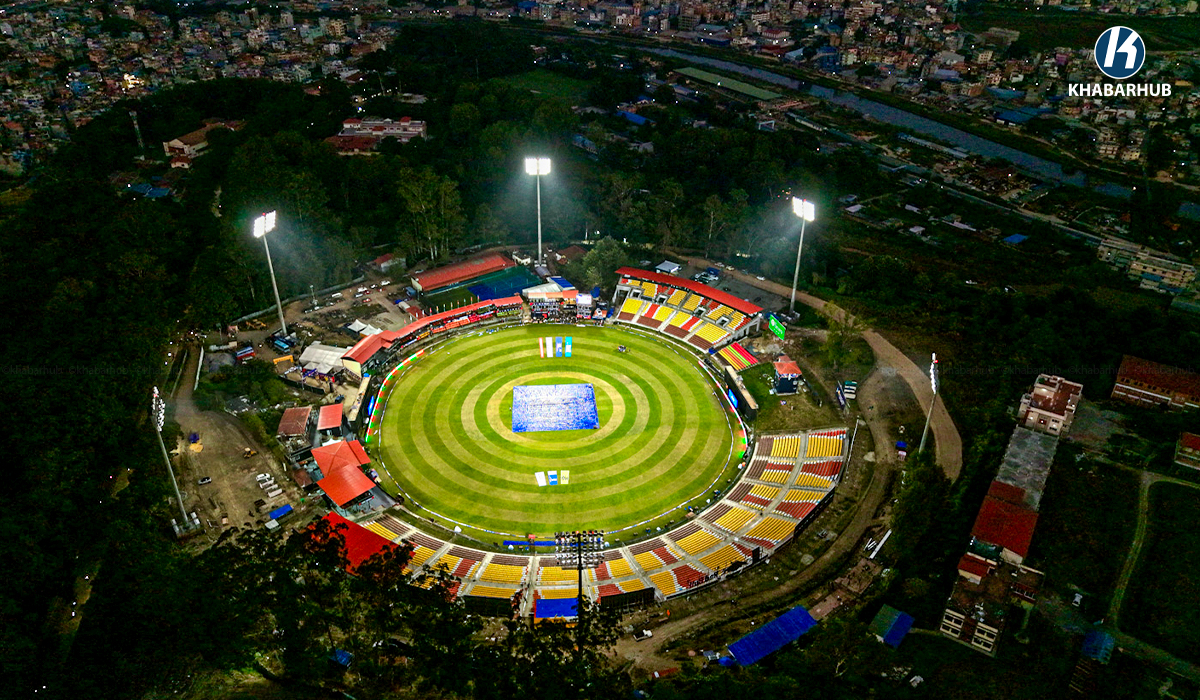
Aerial view of Urlabari. File photo
The Health Institution Operation Standards, 2020, is in force in Nepal. Chapter three of the said standards specifies “Building and Infrastructure Standards.” According to the said standards, when constructing a health institution building, the provisions in Sections 10 and 11 of the Building Act, 1998, and Schedule 1 must be complied with. The same standards mention that the building must be designed in accordance with the “Guidelines for Infrastructure Design and Construction of Health Buildings, 2017.” That means construction materials, load-related arrangements, seismic load, snow load, and wind load. The guidelines stipulate that structural design standards and some mandatory universal rules must be followed. “When designing according to this code, in the case of load-bearing structures, the mandatory use of sill bands, lintel bands, stitch bands, and vertical bars, and in the case of frame structures, designs incorporating seismic load as well tied with rebars by proper methods must be present,” it is said in the guidelines.



Comments
0 commentsNo comments yet — be the first.